When AI answers replace the search results page
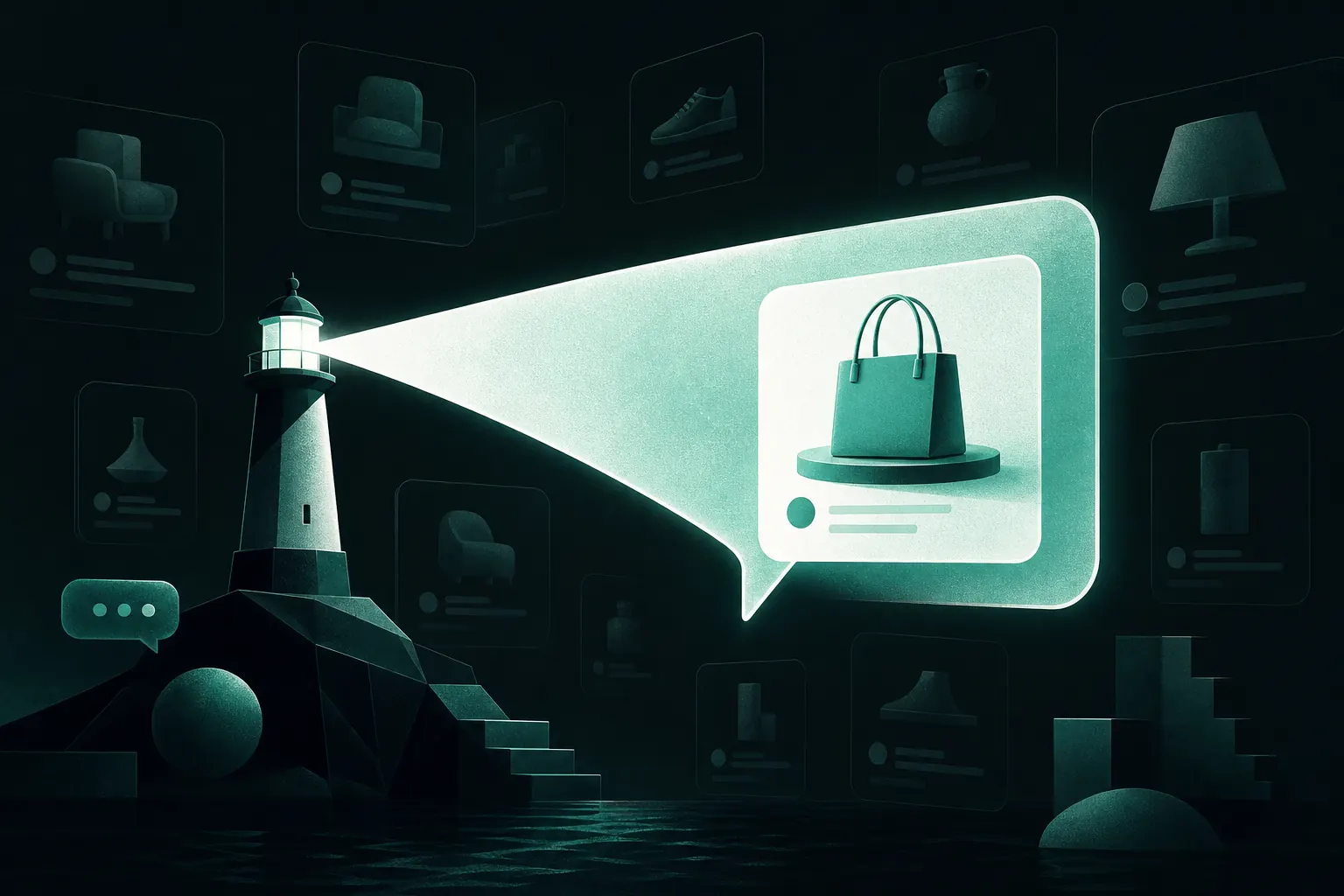
When AI assistants answer questions directly, buyers see a summary instead of ten blue links, and only a few brands get mentioned. Visibility now depends on whether your content answers the real questions audiences ask, in clear, citable language. Marketers need to find those questions from real conversations and build answer-ready content around them.
A growing share of buyer research starts in a chat window. People ask ChatGPT, Gemini or Perplexity to compare options, or read an AI Overview at the top of a search page. This Marketing Mondays signal looks at what that means for brands, and the practical steps that follow.
What changes when AI answers the question?
Three things.
- Fewer clicks. If the answer is on the page, many people never visit a site.
- Fewer brands mentioned. An answer might name three options, not thirty.
- Different signals of authority. Clear, structured, specific content that directly answers a question tends to be easier for AI systems to use.
Listening data shows marketers already feel this. Generative AI changing brand visibility is a recurring concern, alongside the fear of losing human connection as more of the journey becomes automated.
Is this the end of SEO?
No, but it is a broadening. Classic search optimisation still matters, because AI systems often draw on content that ranks well. Alongside it, answer engine optimisation (AEO) and generative engine optimisation (GEO) focus on being the source an AI chooses to cite or summarise. Our sister agency SNMRush works across all three, and its view is simple: get found in search and in AI answers, using content built from the questions audiences actually voice.
How do you find the questions that matter?
Keyword tools tell you what people type into search boxes. They tell you less about the longer, more conversational questions people ask AI assistants, or the worries behind them. Social conversation is a richer source. When people post "is it worth paying more for X if I only need Y?", that is the question an assistant will be asked too.
SOMIN, the AI audience-research platform behind Marketing Mondays, surfaces these tensions and questions from real posts. Its brand research tools are a practical starting point, and the Reassured case study shows a brand grounding its content in what its audience was really asking.
What does answer-ready content look like?
A direct answer first
Open with a short paragraph that answers the question plainly. Every article on this site does this, for exactly this reason.
Clear entity naming
Say who you are and what you do in plain words. "SOMIN, an AI audience-research platform" is easier for a model to use than a clever tagline.
Question-shaped headings
Use the questions people actually ask as headings, then answer them.
Definitions and checklists
Short, structured blocks are easy to quote accurately.
Evidence and specifics
Generic content is easy to replace with a summary. Specific, evidenced content is worth citing.
Checklist: an AI visibility audit in one afternoon
- List the ten questions your best customers asked before buying.
- Ask three AI assistants each question. Note which brands appear.
- Check whether your site has a page that answers each question directly.
- Rewrite the opening paragraph of your top pages as a 40 to 60 word answer.
- Add question-style headings and a short FAQ.
- Repeat the assistant check in a month.
How do you keep the human connection?
If AI summarises your brand, your brand needs something worth summarising. That means a clear point of view, real expertise and a voice that sounds like people. It also means showing up where humans still gather: communities, events and creators. We discuss the creative side of this in escaping the sea of sameness.
For a wider view of how SOMIN approaches AI-driven marketing, the SOMIN blog covers the topic regularly.
Who should own AI visibility?
In many teams, nobody does. SEO sits with one person, content with another, brand with a third, and AI answers fall in between. We think the owner should be whoever is closest to audience questions, because that is the raw material. Give them a monthly slot to run the assistant check, a short list of pages to improve, and a direct line to the content team. Visibility in AI answers is less about technical tricks and more about consistently answering what people really ask, which is a marketing job, not only a technical one.
Start small. Choose the five questions that matter most to your revenue and make sure your site answers each one better than anyone else, in plain language, with evidence. Track whether assistants begin to mention you. Then widen the list. Brands that treat this as a steady monthly habit, rather than a one-off project, tend to build visibility that compounds, because each well-answered question makes the next one easier to win. It is also worth asking your sales and service teams which questions they hear most often, since those rarely show up in keyword tools but are exactly what buyers type into a chat window.
Definitions
- AEO: answer engine optimisation, structuring content so it can be used as a direct answer.
- GEO: generative engine optimisation, increasing the chance a generative AI system cites or mentions your brand.
- AI Overview: an AI-generated summary shown at the top of some search results.
- Entity: a clearly named thing, such as a brand or product, that AI systems can recognise.
This is a fast-moving area, and nobody has all the answers. That is exactly why it works as a community conversation. Bring your audit results to the Marketing Mondays LinkedIn group or WhatsApp community, or ask for an invite at ask@mondays.marketing.
Frequently asked questions
How do AI answers affect brand visibility?
AI assistants summarise answers and mention only a few brands, so fewer people click through. Brands need clear, specific content that answers real questions to be included.
What is the difference between SEO, AEO and GEO?
SEO targets rankings in search results. AEO structures content to serve as direct answers. GEO aims to have generative AI systems cite or mention your brand.
How can I check if my brand appears in AI answers?
List the questions customers ask before buying, put them to several AI assistants, note which brands appear, and repeat monthly after improving your content.
Request an invite
Marketing Mondays is a Singapore community of marketers, founders and agency teams, plus a weekly YouTube show. Real competitor and audience signals, not opinions, and a room of peers to test them with.
Email ask@mondays.marketing →